


When the Skyline Disappeared: Singapore’s Worst Haze Years


Singapore cannot control the sky above it. Every few years, smoke from fires burning hundreds of kilometres away rolls in, and the city goes grey. The skyline fades and the air carries a faint smell of burning. Here is a look back at the years that stand out, and at the one we are living through now.
1961 and 1972: The Early Warnings
Haze is older than most people assume. Singapore’s first real encounter with it came in 1961, likely from forest fires in peninsular Malaysia, and the extent of it surprised Singaporeans. On 14 October 1972, visibility dropped enough that motorists had to switch on full headlights in daytime, with smoke probably blown over from fires in Sumatra. Singapore had no real response mechanism then, and life carried on. Photos from the period show schoolchildren still playing on their fields.
1997: The Crisis That Defined a Generation
Massive forest fires in Kalimantan and Sumatra caused the 1997 Southeast Asian haze, and Singapore’s 3-hour PSI peaked at 226 on 18 September. The three-hour PSI was introduced during this episode, and its reading stood as the national record for almost 16 years. The episode also changed policy. The then Environment Ministry drafted a haze action plan to close schools and sports complexes if the PSI exceeded 300.
2006: A Sharp Reminder
In September 2006, Singapore again suffered serious haze, caused as in 1997 by Indonesian forest fires made worse by El Niño. The PSI hit 150 on 7 October, the highest reading of the new millennium up to that point.
2013: The Night the Index Broke

June 2013 changed everything. The 3-hour PSI reached 321 at 10 pm on 19 June, past the “hazardous” threshold of 300 and far above the old record of 226. It rose to 371 on 20 June. The all-time high of 401 came on 21 June 2013, the first time the PSI had reached the hazardous range. The public was advised to minimise outdoor activities and wear N95 masks if they had to go out.
The cause was familiar. Satellite images showed smoke from illegal fires in Sumatra blowing towards Singapore and southern Malaysia. The scramble for protection showed how unprepared people were. Face masks and air purifiers sold out at pharmacies and department stores. Some shops charged inflated prices, and the government announced one million N95 masks for 200,000 lower-income households. In Parliament, a minister said panic buying was driven by fear of being the last person without a mask, and that the number of people who needed one was far smaller than the number sold. Some residents also called for an early warning system.
2015: Schools Shut
2015 was the long grind. On 24 September, the PSI entered the hazardous range, reading 313 at 7 pm and 317 at 8 pm, which led the Ministry of Education to close all primary and secondary schools the next day. The 3-hour PSI reached 341 at 5 am on 25 September, and masks were handed out to the elderly and other vulnerable people. It was the first time schools had been closed because of haze. The O-Level music practical exams were pushed to the following Tuesday. Officials still describe 2015 as Singapore’s most severe haze by the 24-hour measure.
2019 and 2023: Close Calls
In September 2019, haze blanketed Singapore for days, with the 24-hour PSI around 111 to 126 on 18 September, after reaching unhealthy levels on 14 September for the first time in three years. Organisers of the Singapore Grand Prix said their contingency plan covered haze. In October 2023, the 24-hour PSI reached 111 in the east on 7 October, the first unhealthy reading since 2019. -
2026: The Haze Is Back
This year is not a historical footnote. The PSI first breached unhealthy levels on 4 September, the first time since October 2023, and NEA has issued daily advisories since. The peak was 192 in central Singapore on 9 October, but it has since been overtaken. On the night of 14 October, the 24-hour PSI in the west reached 203 at 9 pm, entering the “Very Unhealthy” range for the first time this year. It reached 208 by 9 am the next morning and hit 212 at noon on 15 October.
The government has responded. N95 mask distribution to vulnerable residents began on 14 October, earlier than initially planned. NEA attributed the smoke to fires in Kalimantan, with more haze over Sumatra. Minister Grace Fu said Singapore is keeping its options open on action against errant companies under the Transboundary Haze Pollution Act. Experts had warned of a long season because of a strong El Niño. The numbers are still well below 2013 and 2015, and the 24-hour PSI hasn’t reached the hazardous range of over 300, but the story is clearly still developing.
What the Haze Years Teach Us
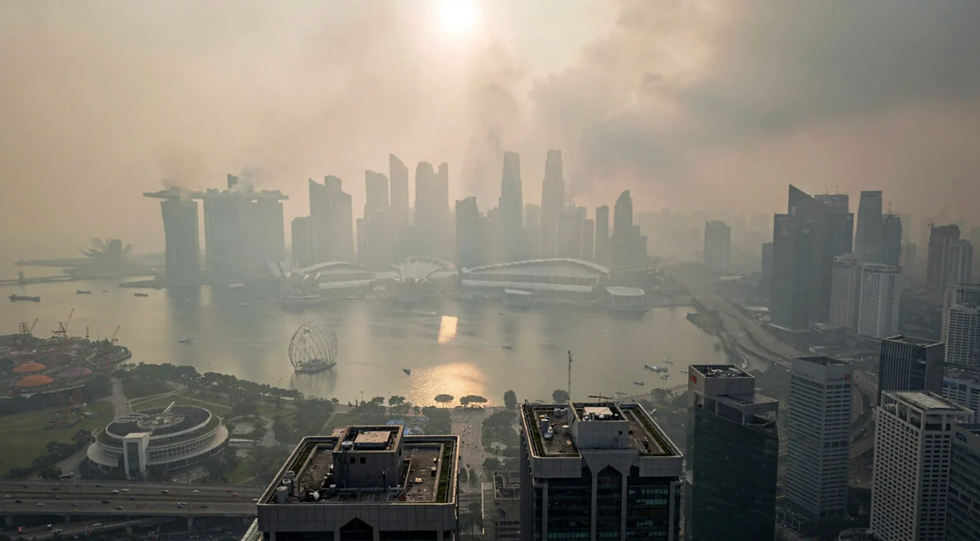
Singapore has gone from carrying on regardless in 1972 to closing schools, issuing hourly readings and pursuing regional diplomacy. Since 1997, it has provided satellite pictures and fire hotspot coordinates to Indonesian authorities. Each haze season tests how much the region has learned from the last


Comments